
Presentation of Book on the History and Cultural Heritage of the Karabakh Khanate Held in Rome
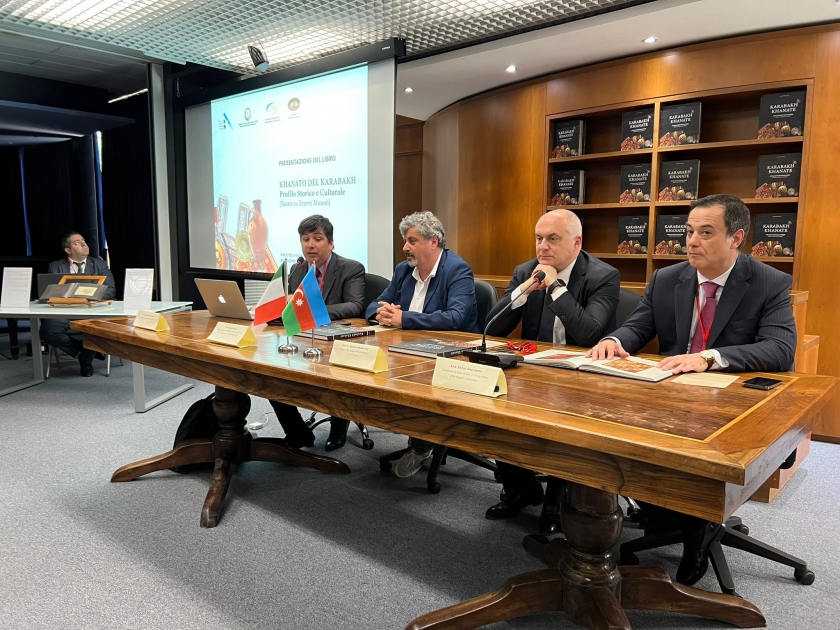
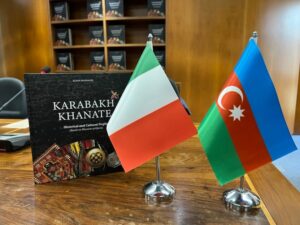
The Italian-language edition of the album-book “Karabakh Khanate: Historical and Cultural Identity” was presented at the National Central Library of Rome. The publication was initiated by the Heydar Aliyev Foundation and supported by the Ministry of Foreign Affairs of the Republic of Azerbaijan.
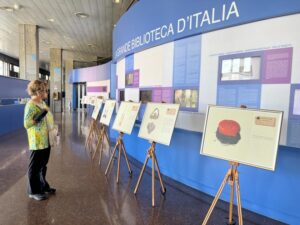
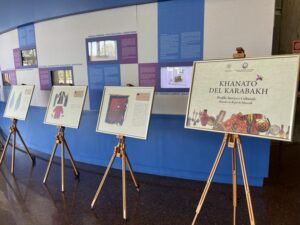
According to AZERTAC, the event began with the opening of the exhibition “Pearls of Karabakh’s Cultural Heritage” in the library’s foyer, which will be on display until July 1. Participants had the opportunity to view photographs of cultural artifacts from the Karabakh Khanate (1747–1822), preserved in the collections of the National Museum of Georgia. The photographs showcased at the exhibition are based on images of artifacts featured in the book “Karabakh Khanate: Historical and Cultural Identity.” Particularly noteworthy among the exhibits are images of the Karabakh Khanate’s flag, Shah Ismail’s shield (kept by the Karabakh khans), antique carpets, decorative tiles and façade of the Sardar Mosque, 19th-century views of the city of Shusha, the exterior and interior of the Sardar Khan’s palace from the late 19th – early 20th centuries, as well as photos of a 19th-century saddle, two- and three-stringed kamancha instruments, and portraits of Hasan Gulu Khan Qajar and Fath-Ali Shah Qajar painted by Mirza Gadim Iravani.
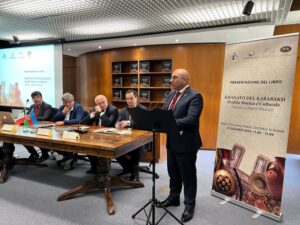
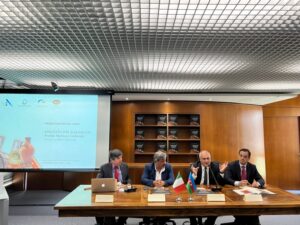
The book presentation conference was attended by Italian scholars and professors, as well as public figures. In their opening remarks, Library Director Stefano Campagnolo and Azerbaijan’s Ambassador to Italy, Rashad Aslanov, highlighted that the Italian edition—published in a total of six languages—would play an important role in informing the Italian public about the ancient history and cultural heritage of Azerbaijan in Shusha, the jewel of the Caucasus, and the wider Karabakh region.
During the main panel discussions, moderated by Sapienza University of Rome researcher and professor Daniele Pommier Vincelli, the Director of the Georgian National Museum and prominent archaeologist Professor David Lordkipanidze, along with Fabrizio Conti, Creative Director of Artcloud Network International (a company specializing in heritage restoration), emphasized that ethnographic materials collected during the Russian Empire and preserved in Georgia clearly demonstrate that Karabakh has been a key center of Azerbaijani culture.
Concluding the discussions with a report titled “The Role of Karabakh in the National Identity of Azerbaijan,” Ambassador-at-Large of Azerbaijan’s Ministry of Foreign Affairs, Elshad Iskandarov, stated that Azerbaijan’s cultural and religious heritage in the Karabakh region was destroyed by Armenia during the occupation. He noted the importance of Georgian scholars’ in-depth studies of the Karabakh Khanate’s legacy in uncovering the historical realities of the region’s role in the national self-identity of the Azerbaijani people. He added that the book, initiated by the Heydar Aliyev Foundation, once again demonstrates that the revival of Karabakh in the post-conflict period is a national mission of the Azerbaijani people.
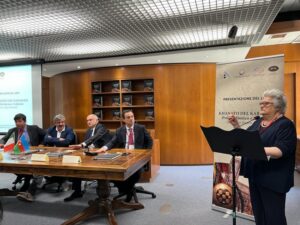
Sapienza University researcher Professor Giovanna Motta described the book’s publication as a unique project aimed at uncovering material evidence of Azerbaijan’s rich historical and cultural heritage.
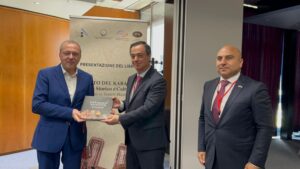
At the conclusion of the conference, a special certificate was presented to the Azerbaijani side confirming the book’s inclusion in the National Central Library of Italy’s collection. Copies of the book were also distributed to event participants.
It is worth noting that the book “Karabakh Khanate: Historical and Cultural Identity,” compiled under the direction of Professor Eldar Nadiradze, includes photographs of more than 300 artifacts belonging to the Karabakh Khanate. These artifacts were collected during military and academic expeditions conducted by Tsarist Russia in the 19th century in Karabakh and are currently preserved in the National Museum of Georgia. For various reasons, these artifacts were never publicly displayed after being archived and remained uncatalogued for over 100 years. The cataloged collection presented in the book—an indicator of Azerbaijan’s rare cultural heritage—will help boost international interest in the Karabakh Khanate as an integral part of Azerbaijan’s history and its rich cultural legacy. The book is published in Azerbaijani, Russian, English, French, Arabic, and Italian.